Last updated June 21, 2026
Garage Door Permits, Codes & Inspections in TX: What You Need to Know
Since 2022, Austin home sale inspectors have been flagging unpermitted garage door replacements with noticeably more frequency — and the consequences aren’t just a fine. We’ve seen homeowners in Steiner Ranch and South Congress face hold orders that paused their closings for weeks while remediation work was scheduled, re-inspected, and documented. The problem isn’t that the work was done badly. It’s that it was done without the paperwork that proves it met code. This guide covers exactly when a garage door job in Austin requires a permit, how surrounding municipalities like Cedar Park and Round Rock differ, what inspectors actually look for, and what happens when you skip the process.
Quick Answer
In Austin, a garage door permit is generally required when a project involves structural changes — like creating a new opening, modifying the header, or converting an attached garage — but not for like-for-like spring, cable, or opener repairs. Full panel replacements occupy a gray zone that depends on whether structural work accompanies the swap. Skipping a required permit can surface during a title search and delay or derail a home sale, sometimes requiring the work to be opened up and re-inspected before closing proceeds.
Table of Contents
- When Does a Garage Door Job in Austin Require a Permit?
- Travis County vs. Surrounding Municipalities: Cedar Park, Round Rock, and Pflugerville
- What the Texas Residential Code Says About Garage Doors and Openers
- UL 325 Auto-Reverse and Safety Standards: What Inspectors Test For
- The Real Cost of Skipping a Permit: Title Searches, Hold Orders, and Remediation
- How to Request an Inspection in Austin: Step-by-Step
- What Austin Inspectors Specifically Look For on Garage Door Work
- Common Mistakes to Avoid
When Does a Garage Door Job in Austin Require a Permit?
This is the question that trips up more Austin homeowners than any other, because the answer depends on the scope of the work — not simply whether the job touches a garage door. The City of Austin Development Services Department follows the 2021 International Residential Code (IRC) as adopted and amended by Texas, and the general principle is straightforward: if the work is structural, you need a permit. If it isn’t, you probably don’t.
Here’s where most people get confused. Replacing a broken spring, swapping a worn cable drum, or installing a new LiftMaster opener in place of a failed unit — none of that requires a permit. These are maintenance and component-level replacements, and Austin’s code treats them accordingly.
The permit threshold kicks in at the structural level:
- Creating a new garage door opening in an existing wall — always requires a permit, because a structural header must be sized and inspected.
- Widening an existing opening — same rule applies. Even adding 12 inches to fit a two-car door where a single-car opening existed requires permit and inspection.
- Modifying or replacing the structural header above a door — permit required regardless of whether the door itself is being changed.
- Converting garage space to living space (or vice versa) — a separate and more involved permit process, but garage door removal is part of it.
- Full door system replacement in some interpretations — this is the genuine gray zone. Austin Development Services has, on a case-by-case basis, flagged full-system replacements that also involved any framing adjustment. When in doubt, call the Development Services Department at (512) 978-4000 before starting work.
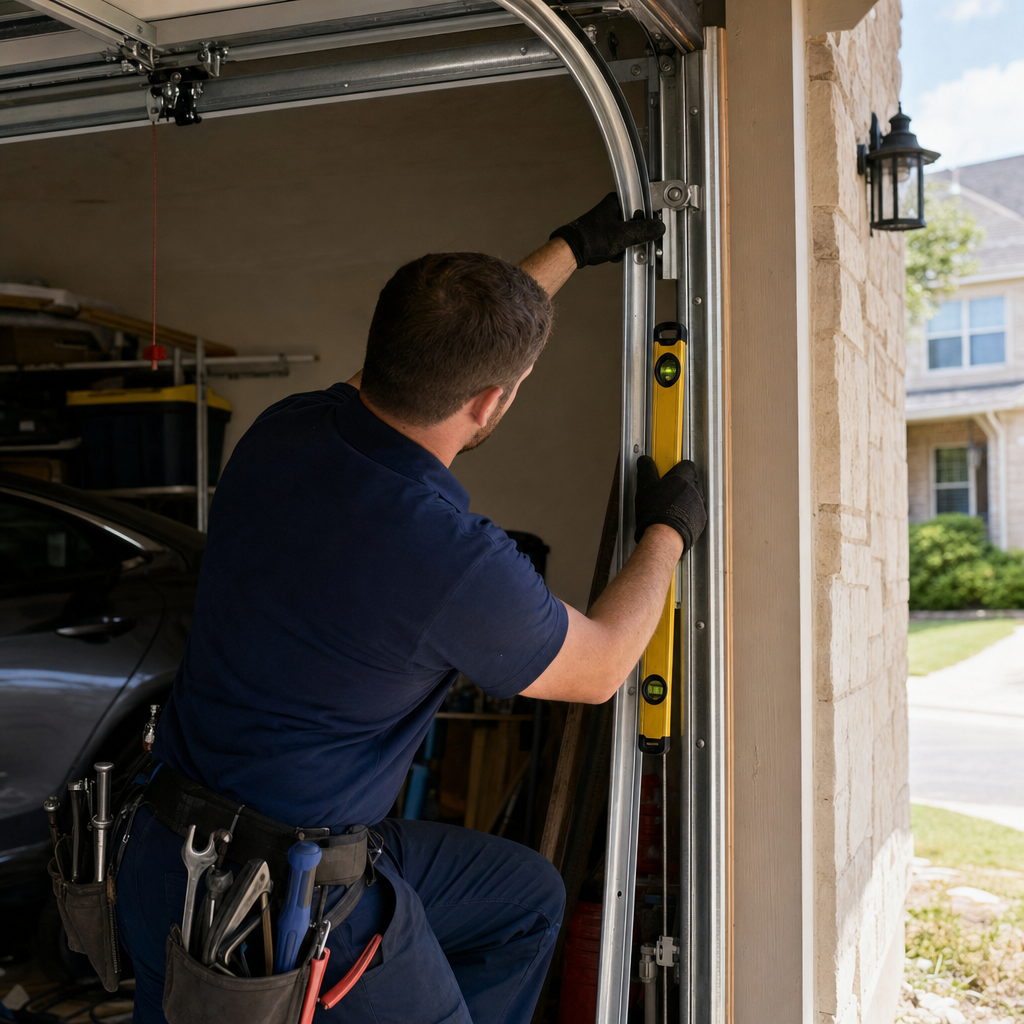
The practical takeaway: if the rough opening dimensions stay identical and no framing is touched, a door replacement is almost always permit-exempt in Austin. The moment a saw touches a stud or a header comes down, you’re in permit territory.
Travis County vs. Surrounding Municipalities: Cedar Park, Round Rock, and Pflugerville
One of the most overlooked facts about the Austin metro area is that permit requirements don’t stop and start at the Austin city limits — and what’s true inside Loop 360 may not apply in Pflugerville or Cedar Park. This matters because a huge share of the growth in the Austin area over the past decade has been in these surrounding cities, and homeowners there are working under different (sometimes stricter, sometimes more lenient) permit frameworks.
Travis County (unincorporated areas): Homes in unincorporated Travis County — think parts of Rollingwood, Bee Cave, and rural stretches beyond 620 — are not subject to City of Austin permitting. Travis County does not have a county-level building department that requires permits for garage door work in the same way municipalities do. That said, deed restrictions and HOA rules in many of these communities can impose their own requirements, and the Texas Department of Insurance has statewide standards for opener safety that apply everywhere.
Cedar Park: Cedar Park follows the 2021 IRC and requires a building permit for any structural garage door modification. For straight replacements (same opening, same size), Cedar Park’s standard interpretation is that a permit is not required — but the city’s Community Development Department recommends confirming before starting, as individual inspectors have discretion.
Round Rock: Round Rock’s Development Services aligns closely with Cedar Park’s approach but has been more consistent about requiring permits when a full door replacement is paired with any framing work. We’ve seen Round Rock inspectors specifically ask for documentation on header sizing when a wood header was replaced with steel during a door upgrade.
Pflugerville: Pflugerville issues permits through its Building Inspections Division and generally follows the same structural-threshold rule. One notable local factor: Pflugerville’s rapid growth since 2020 has created some inspection backlog, so plan for longer lead times than you might expect in Austin proper.
The bottom line across all these cities: confirm with the local authority having jurisdiction (AHJ) before any work that touches framing. A five-minute phone call is cheaper than a hold order.
What the Texas Residential Code Says About Garage Doors and Openers
Texas adopted the 2021 International Residential Code with amendments, and the state’s residential code has specific language that touches garage doors at two levels: structural requirements for the opening itself, and safety requirements for automatic openers.
Structural header requirements: IRC Section R603 and related sections require that any garage door opening be spanned by a properly engineered header capable of carrying the load above it. For a standard 9-foot single-car door opening, a double 2×10 or equivalent engineered lumber header is typical in single-story construction. For a 16-foot double-car opening, the header sizing requirements increase substantially, and a structural calculation may be required by the inspector. This is why widening an opening — even by a small amount — isn’t a DIY-permit-free project in Texas.
Wind load provisions: Texas adds a layer that many northern states don’t: wind load requirements. In Central Texas and the Austin area, the design wind speed for residential construction is in the range of 90–115 mph depending on exact location and exposure category. Garage doors in new construction or replacement projects are expected to meet these wind load ratings, and the door’s product label should document compliance. This is particularly relevant in newer neighborhoods where engineered systems are spec’d by the builder.
Fire separation between garage and living space: IRC Section R302.5 requires that the wall and door assembly between an attached garage and the home’s interior maintain a fire-resistance rating. This doesn’t regulate the exterior garage door itself, but it’s frequently discussed in the same inspection — if a door between the garage and the house is propped open or replaced with a non-rated assembly, inspectors will flag it alongside any garage door work.
UL 325 Auto-Reverse and Safety Standards: What Inspectors Test For
UL 325 is the Underwriters Laboratories standard that governs automatic residential garage door openers, and it’s been the baseline safety requirement in the United States since the early 1990s — with meaningful updates in 1993 and subsequent revisions through the 2010s. Any opener sold in the U.S. today must comply with UL 325, and Texas inspectors check for compliance when opener work is part of a permitted project.
Here’s what UL 325 actually requires, in practical terms:
- Entrapment protection: The opener must include at least one entrapment protection device. The most common is a photo-eye sensor mounted within six inches of the floor on each side of the door — if the beam is broken while the door is closing, the door reverses. This is the sensor that gets knocked out of alignment by lawn equipment and causes the door to refuse to close.
- Auto-reverse on contact: Separately from the photo-eye, the opener must reverse if the door contacts an obstruction with more than a specified amount of force. Inspectors test this by placing a 1.5-inch object (like a 2×4 laid flat) under the door and triggering a close cycle — the door must reverse on contact.
- Manual disconnect: There must be a clearly accessible manual release (the red cord on most openers) to allow the door to be operated by hand during a power outage.
- Wall control placement: The wall button must be located where a person can see the door while operating it — not inside the house with no sightline to the door.
When we install a LiftMaster 8500W or a Chamberlain B2405 for an Austin customer, every one of these points is confirmed before we leave the driveway. Modern openers from Genie, Craftsman, and Wayne Dalton ship UL 325-compliant from the factory, but photo-eye alignment and force settings still need to be calibrated on-site. An opener that’s out of force calibration can pass the visual inspection but fail the contact-reverse test — and that’s a real safety problem, not just a paperwork one.
The Real Cost of Skipping a Permit: Title Searches, Hold Orders, and Remediation
Here’s the scenario we’ve heard from Austin homeowners more times than we’d like: they hired someone — sometimes a handyman, sometimes a contractor who seemed legitimate — to replace or install a garage door years ago. The work looked fine. The door worked. Nobody said anything about a permit. Then they listed their home.
During the buyer’s inspection, the inspector flags the garage door installation as potentially unpermitted. The title company, now aware, pulls the permit history for the property. No permit is on file for the work. The buyer’s lender — especially on FHA or VA loans — may now require proof of code compliance before funding. The closing timeline, which was already tight, is now at risk.
The remediation path is not simple:
- Apply for a retroactive (after-the-fact) permit from Austin Development Services. These are granted, but they require documentation of the work performed.
- Schedule an inspection. The inspector will assess whether the work meets current code — not the code at the time of installation.
- If the work fails inspection — or if the inspector cannot verify compliance without opening the wall or header cavity — remediation work must be done. This can mean removing trim, exposing framing, and having the structural elements re-inspected. In a worst case, the header must come out.
- Pay the after-the-fact permit fee. Austin’s DSD charges a penalty multiplier for retroactive permits. As of 2025, the fee for unpermitted work is typically 2× to 4× the standard permit fee.
- Re-inspection and clearance before closing can proceed.
The total cost in a straightforward remediation — assuming no structural deficiencies — commonly runs $600–$2,000 in Austin’s current market when you factor in permit fees, contractor time, and inspection scheduling. If structural issues are found, that number can climb considerably higher. More importantly, the timeline hit is real: Austin Development Services inspection scheduling in busy periods runs 5–10 business days out, which can be long enough to kill a deal if the buyer’s rate lock is expiring.
How to Request an Inspection in Austin: Step-by-Step
If you’re doing permitted garage door work in Austin — or need to pull a retroactive permit — here’s the process as it currently works through the City of Austin Development Services Department.
- Determine whether your project needs a permit. Use the threshold guidance above: structural changes, new openings, or header modifications = permit required. Like-for-like component replacements = no permit required. When unsure, call DSD at (512) 978-4000 or use the Austin Build + Connect (AB+C) portal online.
- Create an account on Austin Build + Connect (AB+C). This is the City of Austin’s online permitting portal. Most residential building permits, including garage-related permits, are processed here.
- Submit your permit application. For a standard garage door opening modification, you’ll need a project description, site address, and basic drawings showing the door size, opening dimensions, and header specifications. A licensed contractor can submit on your behalf — and for structural work, having a licensed contractor on record is strongly advisable.
- Pay the permit fee. Austin’s residential permit fees for garage door-related structural work are generally in the $150–$350 range for straightforward projects, based on project valuation. Retroactive permits carry a multiplier — confirm the current fee schedule at austintexas.gov/permits.
- Schedule your inspection. Once the permit is approved, schedule your inspection through AB+C or by calling (512) 978-4200. Inspections are typically available within a few business days in normal periods, longer during high-volume construction seasons (spring and early fall in Austin).
- Pass inspection and close the permit. The inspector will visit the site, verify the work meets code, and either pass or flag items. If items are flagged, corrections must be made and a re-inspection scheduled. Once passed, the permit closes and the record is public — which is exactly what a title company or buyer’s inspector needs to see.
What Austin Inspectors Specifically Look For on Garage Door Work
Austin inspectors working on permitted garage door projects aren’t just checking that the door goes up and down. They’re verifying a specific set of code compliance points. Knowing what they’re looking for makes it easier to ensure the work is done right the first time.
Header sizing and condition: This is the first thing a structural inspector checks. The header above the door opening must be sized appropriately for the span. Austin inspectors have flagged undersized headers on door widenings — particularly in older homes in neighborhoods like Hyde Park, Cherrywood, and Travis Heights where original construction may predate modern load standards.
Photo-eye sensor installation: Both sensors must be present, mounted within six inches of the floor, properly aligned (indicator lights on both units should be steady, not blinking), and free from physical damage. Inspectors check this on any project where an opener is part of the permitted work.
Auto-reverse force calibration: The inspector may perform the 2×4 test described in the UL 325 section above. If the door doesn’t reverse on contact, the force settings on the opener must be adjusted before the inspection passes.
Manual disconnect functionality: The red release cord must be present and functional. Some older opener models have had their cords removed or the mechanism damaged — this is a fail.
Fire door between garage and home: If the project involves any work near the garage-to-living-space wall, inspectors will check that the interior door is solid-core or fire-rated, properly self-closing, and not propped open with a block. This isn’t directly about the exterior garage door, but it comes up frequently on comprehensive garage projects.
Documentation of the door’s wind load rating: For newer construction or full door replacements in permitted projects, the inspector may ask for the manufacturer’s documentation showing the door meets Texas wind load requirements. Doors from Clopay, Amarr, Wayne Dalton, and other major manufacturers include this certification on the product label or in their documentation package.
Common Mistakes to Avoid
- Assuming a full door replacement never needs a permit. If the contractor touches any framing — even to shim or adjust the rough opening — you may have crossed into permit territory. Confirm the scope in writing before work starts.
- Hiring based on price alone without asking about permits. In Austin, we’ve seen low-bid contractors skip the permit conversation entirely to keep their quote competitive. A $200 savings on installation can cost $1,500+ in retroactive permit fees and remediation if issues arise at resale.
- Assuming Travis County = City of Austin rules. Homes in unincorporated areas of Travis County are not subject to City of Austin permits — but they’re also not automatically exempt from all requirements. HOA rules, deed restrictions, and statewide safety standards still apply.
- Skipping the photo-eye test after DIY opener installation. A lot of Austin homeowners install their own Chamberlain or Genie openers from the hardware store — that’s fine for permit purposes, but failing to properly align and test the photo-eyes is a genuine safety hazard, not just a code issue.
- Not keeping a copy of the permit and inspection record. Once a permit closes, the record is public — but having your own copy is smart. Store it with your home’s title documents. When you sell, your agent and the buyer’s inspector can reference it immediately rather than running a permit history search.
- Widening a door opening without a structural engineer’s input on older Austin homes. Homes built before 1980 in areas like Brentwood, Crestview, and Allandale often have non-standard framing. What looks like a simple widen to a 16-foot double-car opening can reveal unexpected header configurations that require engineering review.
- Not confirming your suburb’s specific requirements before starting. Round Rock, Cedar Park, and Pflugerville each have their own development services departments with their own timelines, fee schedules, and interpretive habits. Don’t assume Austin’s rules apply across the metro.
When to Call a Professional
Pull a permit yourself if you’re comfortable navigating Austin Build + Connect — the system is reasonably user-friendly for simple projects. But bring in a professional when:
- Any framing or header work is involved — structural decisions made incorrectly can have serious consequences.
- You’re in an older Austin home (pre-1980) where framing surprises are common.
- You’re dealing with a retroactive permit situation ahead of a home sale — timing is critical and mistakes cost closings.
- The opener installation involves anything beyond a straight swap (new wiring, new circuit, or upgrading to a jackshaft unit like the LiftMaster 8500W on a low-headroom door).
- An inspector has flagged your current door system and you’re not sure what the citation means.
Total Garage Door Experts Austin offers free estimates across Austin — Paul Martin, who has 12 years in the trade and has navigated permit questions with hundreds of local homeowners, will tell you straight whether the job needs a permit and what the process looks like. Call (737) 210-3210 to get a clear answer before work starts.
Frequently Asked Questions
In most cases, a like-for-like garage door replacement — same size, same opening, no structural changes — does not require a City of Austin permit. A permit is required when the project involves modifying the rough opening, replacing or adjusting the structural header, or creating a new garage door opening. If you’re unsure whether your specific project crosses that line, call Austin Development Services at (512) 978-4000 before work starts. Call (737) 210-3210 if you’d like a professional opinion first — estimates are free.
Austin Development Services charges a penalty multiplier for unpermitted work discovered after completion. As of 2025, that multiplier is typically 2× to 4× the standard permit fee, which itself is based on project valuation. For a garage door structural project, the base fee commonly runs $150–$350, meaning a retroactive permit could run $300–$1,400 before any remediation work is factored in. The total cost including contractor remediation time and re-inspection commonly reaches $600–$2,000 in Austin’s current market. Call (737) 210-3210 for help understanding what a specific situation might involve.
UL 325 is the Underwriters Laboratories safety standard that all residential garage door openers sold in the United States must meet. It requires entrapment protection (photo-eye sensors within six inches of the floor), auto-reverse on contact with an obstruction, a manual disconnect, and proper wall control placement. Every opener Paul and his team install — whether LiftMaster, Genie, Chamberlain, or another major brand — is tested against these standards before the job is closed out. An opener that doesn’t meet UL 325 is both a safety risk and a code compliance problem on any permitted project.
No — each city has its own Development Services department, fee schedule, and interpretive practices, even though all three generally follow the 2021 IRC. Round Rock tends to scrutinize header documentation more closely on full replacements paired with framing work. Pflugerville has experienced inspection backlogs due to rapid growth. Cedar Park’s standard interpretation exempts like-for-like replacements, but confirms it recommends checking before starting. Always contact the specific city’s permitting office rather than assuming Austin’s rules apply across the metro.
Yes — and it’s happening more frequently since 2022. A buyer’s inspector or the title company can pull the permit history for your property. If structural garage door work appears to have been done without a permit, lenders (especially on FHA or VA loans) may require proof of code compliance before funding. The remediation path — retroactive permit, inspection, possible remediation work, re-inspection — can take weeks and put a closing at risk. The cleanest resolution is to pull the permit correctly before work starts. If you’re already in a sale situation, call (737) 210-3210 to discuss options.
A standard plug-in opener installation (where the unit plugs into an existing outlet in the garage ceiling) typically does not require an electrical permit in Austin. If the installation requires running new wiring, installing a new dedicated circuit, or any panel work, that work does require an electrical permit separate from any building permit for structural changes. Hardwired jackshaft openers, like the LiftMaster 8500W, installed in a garage without an existing appropriate circuit fall into this category. When in doubt, ask your installer before work begins.
The Bottom Line
Garage door permits in Austin come down to one threshold: did the work touch the structure? Simple repairs and component replacements — springs, cables, panels, openers — are almost always permit-exempt. New openings, header modifications, and widened rough openings require a City of Austin permit and inspection. Skipping that process can surface at the worst possible moment — a home sale — and the fix is neither cheap nor fast. Surrounding cities like Cedar Park, Round Rock, and Pflugerville follow similar logic but have their own processes. Confirm before you start, keep your permit records, and work with contractors who know the difference.
For Garage Door Repair in Austin, Garage Door Installation in Austin, or Garage Door Opener in Austin service, Paul Martin and his team at Total Garage Door Experts Austin are ready to walk you through exactly what your project requires — permit and all. With 12 years in the trade and over 1,200 five-star reviews from Austin homeowners, we’ll give you a straight answer before a single tool comes out of the truck.
Ready to get started or have a permit question? Call (737) 210-3210 for a free estimate. No runaround, no dispatcher — just a direct conversation with someone who knows Austin’s garage door landscape inside and out.
Written by Paul Martin, Owner & Lead Technician at Total Garage Door Experts Austin, serving Austin since 2014.